
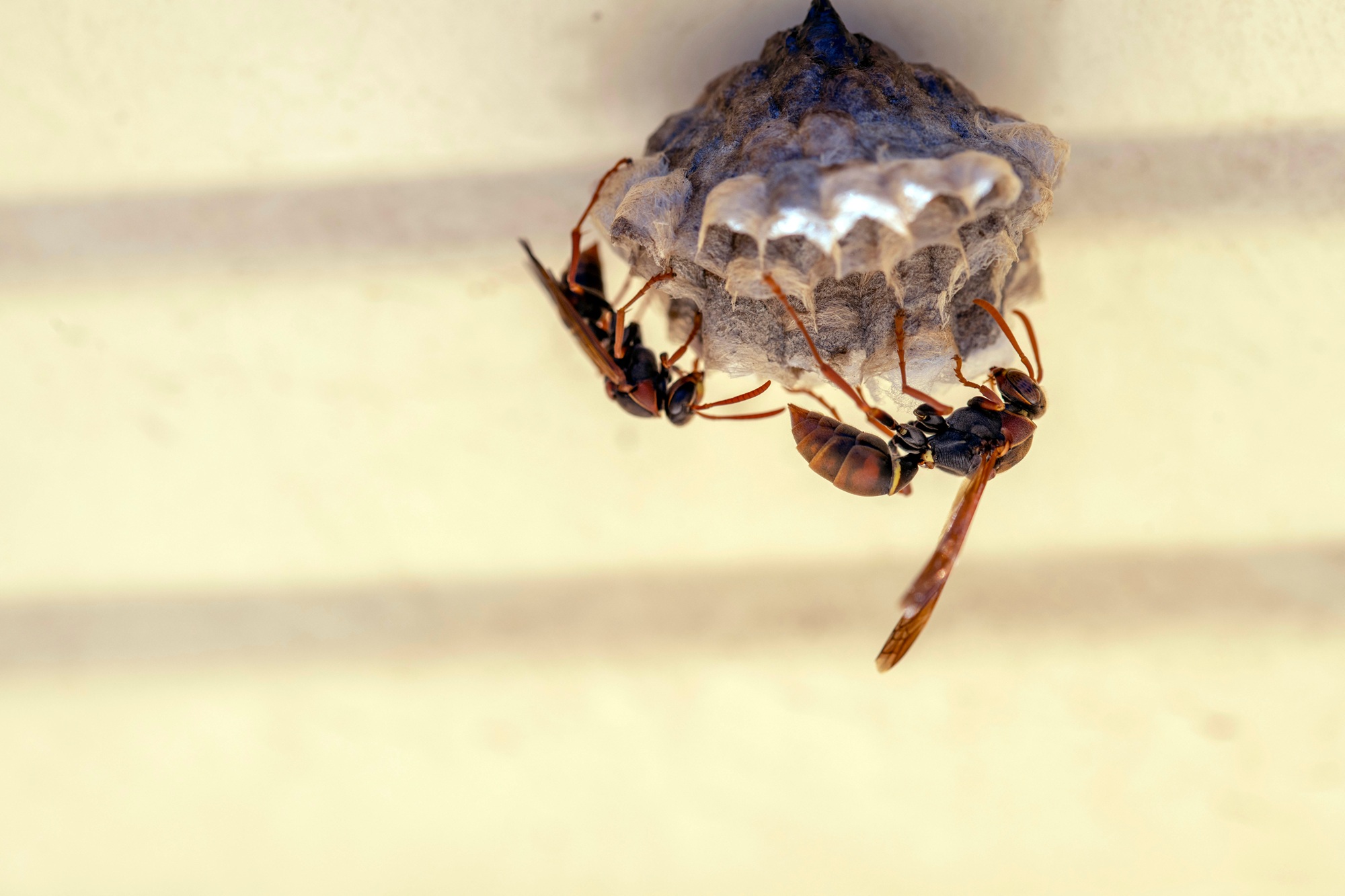
Why Eliminating One Nest Doesn’t Always Mean the Problem is Gone
Many property owners assume that once a visible nest is removed, the entire wasp problem disappears. Unfortunately, that’s not always the case. In larger territories, multiple colonies can exist simultaneously, creating what pest professionals call satellite nests. This is why effective wasp removal in Fort Worth TX services involve much more than removing a single nest. Experienced technicians evaluate surrounding activity, hidden colonies, and future risks to ensure complete protection.
Wasp removal addresses secondary satellite nests by identifying nearby colonies, inspecting surrounding nesting areas, evaluating wasp movement patterns, and implementing targeted control measures. This comprehensive approach helps eliminate active nests while reducing the risk of new colonies developing throughout larger wasp territories.
Satellite nests often go unnoticed because they may be hidden beneath rooflines, inside wall cavities, around sheds, or within landscaping features. Without a comprehensive removal plan, surviving colonies can continue to expand across a property, leading to recurring infestations and heightened safety concerns.
What Makes Secondary Satellite Nests Such a Persistent Threat?
Many wasp species don’t always concentrate activity around a single nest. As colonies expand, new nesting locations can develop throughout the surrounding territory.
This behavior is especially common in areas with abundant food sources, water access, and shelter. Certain wasp species, including paper wasps, Yellow jackets, and even some Cicada Killers, may establish multiple nesting sites within the same general area.
A common People Also Ask question is: Can wasps have more than one nest on the same property? The answer is yes. Large territories frequently support several active colonies, especially in warmer regions of North Texas where nesting seasons are extended.
Throughout neighborhoods such as Sundance Square, the Cultural District, West 7th, Ridglea Hills, and other areas of Fort Worth, technicians often discover hidden Wasp nests long after the original colony has been removed. This makes comprehensive inspections essential for successful long-term control.
5 Costly Mistakes Property Owners Make When Dealing With Satellite Nests
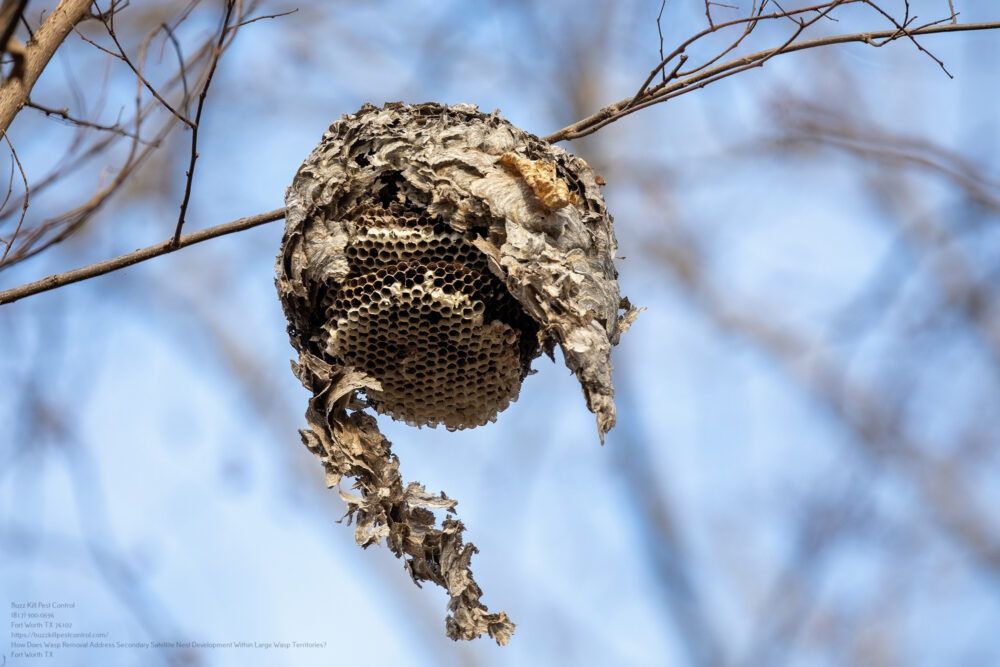
- One of the biggest mistakes property owners make is focusing only on the visible nest. A single nest location rarely tells the entire story.
- Another common misconception is assuming that reduced activity means the infestation is gone. In reality, worker wasps may simply be relocating between colonies.
- Some people attempt DIY nest removal without understanding how extensive the territory has become. This often leaves hidden nests active and capable of rebuilding populations.
- Property owners also frequently overlook structural entry points where wasps gain access to attics, wall spaces, and protected cavities.
- Finally, many fail to schedule a thorough property inspection after initial treatment.
According to the United States Environmental Protection Agency, integrated pest management practices that include inspection and monitoring significantly improve long-term pest control outcomes. Buzz Kill Pest Control helps customers avoid these issues by inspecting the entire property rather than treating only the most visible nest.
Need Professional Wasp Removal Before Hidden Nests Spread?
Contact Buzz Kill Pest Control today for complete inspections and effective solutions.
How Does Wasp Removal in Fort Worth TX Prevent Colony Expansion?
Effective wasp removal in Fort Worth TX services focus on colony networks rather than isolated nests.
When technicians encounter large-scale Wasp infestations, they evaluate surrounding structures, landscaping features, rooflines, storage areas, fencing systems, and utility penetrations. This broader assessment often reveals additional nests that would otherwise remain active.
Addressing satellite colonies early prevents expansion into larger territories. It also reduces the likelihood of encounters that could trigger allergic reactions among residents, employees, or visitors.
For businesses and commercial facilities, preventing colony expansion is particularly important. A restaurant patio, apartment complex, or retail center in Fort Worth can quickly experience operational disruptions if multiple colonies establish themselves nearby.
Buzz Kill Pest Control applies proven Wasp Control methods that address both immediate threats and future nesting risks, creating more reliable long-term protection.
6 Expert Strategies Used to Locate Hidden Satellite Colonies
Finding secondary nests requires more than a quick visual inspection. Professionals use systematic procedures to track activity and locate hidden colonies.
Technicians commonly focus on:
- Monitoring flight paths between nesting locations.
- Inspecting common structural entry points.
- Evaluating landscaping and vegetation density.
- Examining attics, sheds, and crawl spaces.
- Using specialized tools to inspect concealed areas.
- Assessing environmental conditions that support future nesting.
These inspections often reveal colonies hidden inside walls, under decking systems, behind shutters, or beneath roofing materials.
In many situations, wasp removal professionals in Fort Worth, TX, also recommend perimeter treatments to discourage future nesting. These preventive approaches become particularly valuable during peak nesting seasons across Fort Worth and surrounding communities.
Property owners interested in broader pest prevention can also review Buzz Kill Pest Control’s pest control solutions, which explain comprehensive treatment options for recurring pest activity.
What Can Real-World Cases Teach Us about Satellite Nest Development?
Years of field experience reveal a consistent pattern: properties with a single visible nest often harbor additional colonies nearby.
For example, a residential property near West 7th reported recurring wasp activity despite repeated DIY treatments. A detailed inspection revealed three separate satellite colonies hidden around fencing, soffits, and landscaping features. The primary nest had been successfully treated, but the remaining colonies continued to generate new activity.
Another common issue involves confusion between wasps and other beneficial insects. A suspected infestation may actually involve a Honey bee colony, requiring different treatment options. Organizations such as Little Giant Beekeepers advocate proper identification before removal efforts begin.
Professionals also encounter nesting activity near locations associated with broader pest concerns. Properties requiring Ant Control, Cockroach Control, Mouse Control, Flea Treatment, Flea & Tick Treatment, Mosquito Control, fire ant control, or termite control services often present environmental conditions that support multiple pest populations simultaneously.
The key lesson? Never assume the first nest is the only nest.
Why Comprehensive Removal Plans Deliver Better Results
Successful wasp management requires a complete strategy rather than isolated treatments.
A professional removal plan evaluates active colonies, potential nesting zones, structural vulnerabilities, and environmental conditions. This approach helps reduce future activity while improving overall property safety.
Experienced technicians rely on specialized equipment, specialized tools, and appropriate protective gear when accessing difficult nesting areas. Their goal is not simply wasp extermination, but lasting control.
Some situations involve unique challenges, such as Chimney wasp infestations, colonies hidden within masonry structures, or nesting activity near areas occupied by children and pets. These conditions require carefully selected treatment options and customized control measures.
Buzz Kill Pest Control emphasizes comprehensive evaluations because incomplete treatments often allow satellite colonies to survive and spread.
The Most Important Lessons Property Owners Should Remember
Satellite nests represent one of the most overlooked aspects of wasp management. A visible nest may only be one piece of a larger colony network operating across a property.
Effective inspections focus on identifying hidden colonies, evaluating flight activity, locating entry points, and implementing preventive strategies. Combining Wasp Nest Removal, monitoring, and targeted treatments significantly improves long-term results.
For homes and businesses throughout Fort Worth and North Texas, understanding satellite nest development is essential to reducing recurring wasp activity and protecting occupants from future infestations.
Why Buzz Kill Pest Control is the Smart Choice for Complete Wasp Protection
We at Buzz Kill Pest Control provide the best solutions to our customers by looking beyond the obvious nest and identifying the full extent of wasp activity. Our team understands how satellite colonies form and how hidden nests can persist and continue causing problems long after an initial treatment.
We proudly showcase our commitment to thorough inspections, effective treatment strategies, and dependable customer service. Our experienced professionals use proven techniques, specialized equipment, and industry expertise to help protect homes and businesses throughout the region.
Whether you’re dealing with a single visible nest or a larger territorial infestation, we’re ready to help with reliable solutions tailored to your property. Contact Buzz Kill Pest Control for expert wasp removal and professional pest management services in Fort Worth. Trust Buzz Kill Pest Control for complete protection through effective wasp removal in Fort Worth TX.
Need Professional Wasp Removal Before Hidden Nests Spread?
Contact Buzz Kill Pest Control today for complete inspections and effective solutions.