
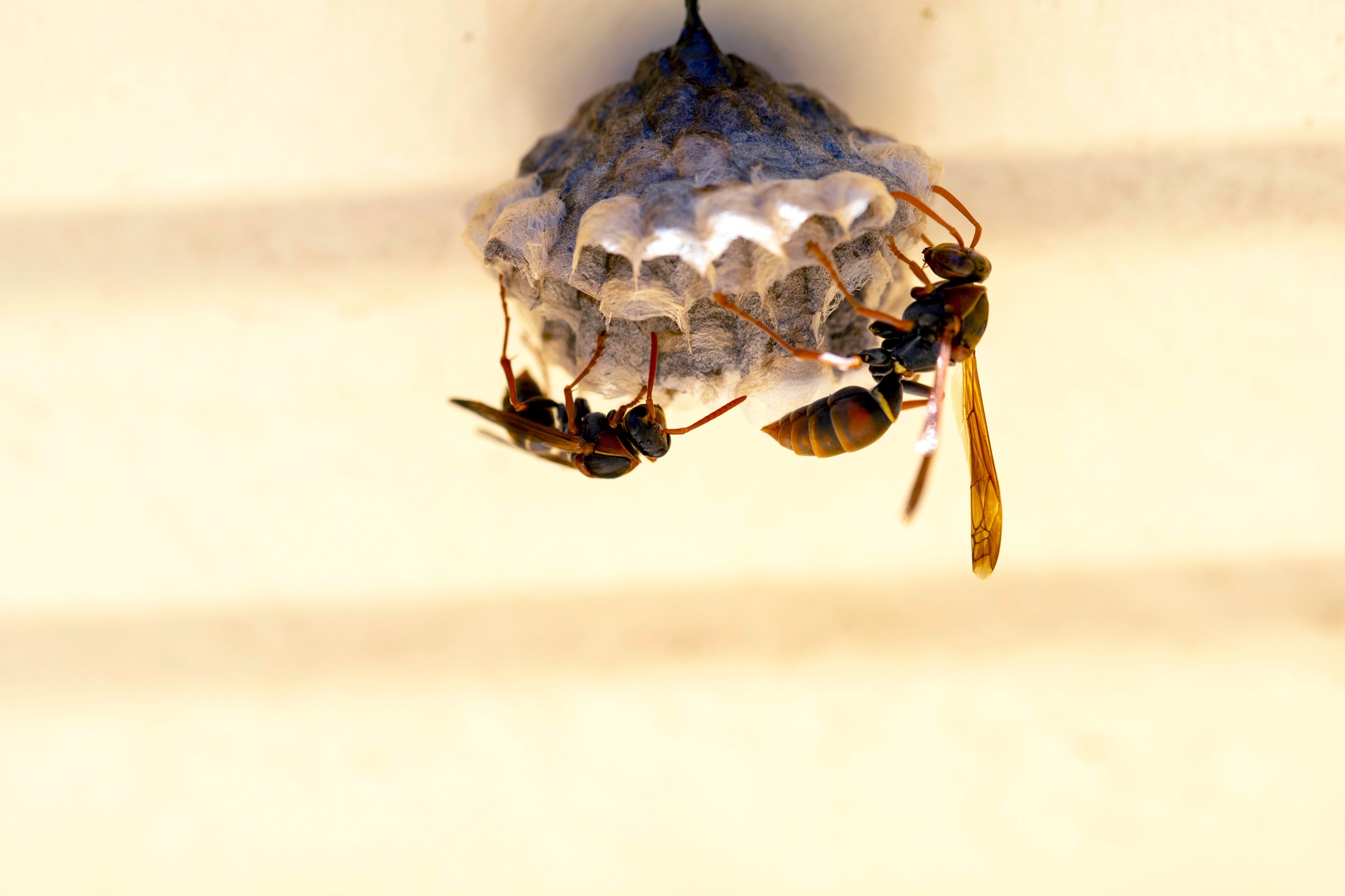
Why Understanding Wasp Behavior Often Matters More Than the Nest Itself
Two nests may look similar from a distance, yet require completely different treatment approaches. That’s because every species behaves differently. Professional wasp removal in Fort Worth TX services rely heavily on understanding species-specific behavioral patterns before selecting treatment methods. Factors such as aggression levels, nesting preferences, colony size, foraging habits, and defensive responses all influence how technicians approach removal.
Professional wasp removal depends on identifying the species involved, as different wasps exhibit unique nesting habits, defensive behaviors, activity patterns, and colony structures. Understanding these behavioral differences allows technicians to create safer, more effective treatment plans while reducing future infestation risks.
Behavioral analysis isn’t just a technical detail. It’s often the difference between successful treatment and recurring problems. A colony of paper wasps behaves differently from Yellow jackets, while Mud Daubers present entirely different challenges. Understanding those differences helps pest professionals protect people and property more effectively.
Why Does Species Identification Change Everything about Treatment?
Not all wasps respond to treatment in the same way. Some species aggressively defend their nests, while others tend to avoid confrontation unless directly threatened.
This is why the Identification of wasp species is one of the first steps in a professional inspection. Proper Identification allows technicians to understand colony behavior, determine the safest treatment strategy, and select the right tools for the job.
A common People Also Ask question is: Why can’t all wasp nests be treated the same way? The answer lies in species-specific behavior. Paper wasps often build smaller exposed colonies, while Yellow jackets commonly establish hidden nests within walls, underground voids, and structural cavities.
Throughout Fort Worth, neighborhoods such as Sundance Square, the Cultural District, West 7th, Ridglea Hills, Camp Bowie Boulevard, and Magnolia Avenue present different environmental conditions that influence local Wasp activity. Understanding these local patterns allows technicians to anticipate challenges before treatment begins.
5 Common Misconceptions that Lead to Ineffective Wasp Control
Many homeowners mistakenly believe that all wasps pose the same risks. This misunderstanding often leads to ineffective treatments.
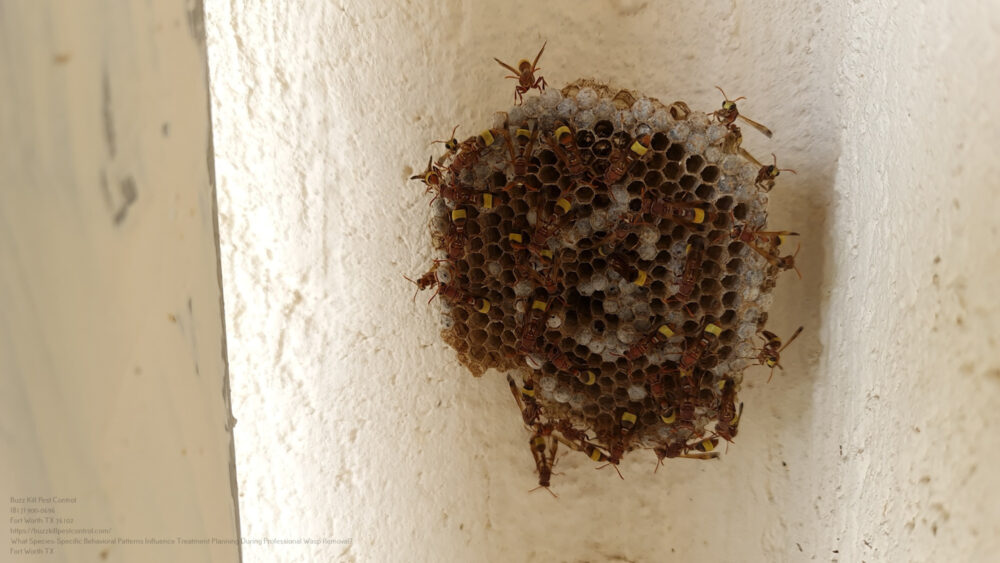
- One common misconception is assuming every visible nest contains aggressive insects. Some species, such as Mud Daubers, are generally less defensive than other wasps.
- Another mistake involves misidentifying beneficial insects. Certain nests suspected to be dangerous wasps may actually belong to honey bees, which require completely different handling procedures.
- Property owners also frequently overlook the importance of a thorough property inspection. Hidden colonies often remain active after visible nests are removed.
- Many people rely on online identification photos instead of a professional evaluation. Even a detailed Wasp Identification Guide cannot always account for regional variations and nesting behavior.
- Finally, some attempt removal without considering health risks. Aggressive colonies can trigger severe allergic reactions, particularly when nests are disturbed unexpectedly.
According to the National Institute for Occupational Safety and Health, stinging insects are responsible for thousands of injury-related incidents each year, underscoring the importance of professional management. Buzz Kill Pest Control helps clients avoid these issues through detailed inspections and species-specific treatment planning.
Need Professional Wasp Removal for Lasting Protection?
Contact Buzz Kill Pest Control today for expert inspections and effective solutions.
How Does Wasp Removal in Fort Worth TX Improve Safety and Results?
The effectiveness of wasp removal in Fort Worth TX often depends on matching treatment methods to behavioral patterns.
Aggressive species require different approaches than passive species. Hidden colonies require different strategies than exposed nests. Large populations require different control measures than isolated colonies.
When technicians understand how specific wasp species behave, they can predict flight paths, colony responses, and defensive actions. This reduces risks during treatment while improving overall results.
For example, a property experiencing significant Wasp infestations near outdoor gathering spaces may require a different removal plan than a home with isolated activity around the roof eaves. By tailoring treatment strategies to behavior, professionals can often reduce the need for repeated service visits.
Buzz Kill Pest Control’s team applies years of field experience and knowledge gained through extensive pest management work across North Texas and the larger Dallas-Fort Worth region.
6 Behavioral Clues Professionals Analyze Before Creating a Removal Plan
Before treatment begins, technicians carefully study several behavioral indicators that influence planning:
- Nest location and accessibility.
- Aggression levels when approached.
- Colony size and activity patterns.
- Daily foraging behavior.
- Seasonal population growth.
- Preferred nesting structures.
These observations help determine the safest and most effective course of action.
A thorough removal plan often includes evaluating structural vulnerabilities, potential entry points, and environmental conditions that support future colonies. In many cases, technicians recommend perimeter treatments alongside Wasp Nest Removal to reduce the risk of reinfestation.
Property owners interested in broader prevention strategies can also explore Buzz Kill Pest Control’s pest management solutions, which address recurring pest activity and long-term protection.
What Can Real-World Cases Teach Us about Wasp Behavior?
Field experience often reveals lessons that textbooks cannot.
For example, technicians working in a commercial property near Magnolia Avenue encountered repeated nesting activity despite several previous treatments. A detailed inspection showed that multiple active nests belonged to different species. Some were hidden within structural voids, while others occupied exposed roofline areas.
Treating every colony the same would have produced inconsistent results. Instead, species-specific strategies enabled technicians to address each nest based on its unique behavior.
Professionals also frequently encounter situations involving bee and wasp removal concerns. Organizations such as the American Beekeeping Federation and the Texas Beekeepers Association encourage proper Identification before removal because honey bees and wasps require different management approaches.
Even companies throughout the industry, including Massey Services and Alamo Pest Control, emphasize the importance of species identification before treatment selection. The principle remains simple: better Identification leads to better outcomes.
Why Long-Term Prevention Depends on Understanding Behavior
Successful pest management doesn’t end when a nest disappears.
Behavioral analysis helps professionals develop long-term prevention strategies that address recurring risks. By understanding where certain species prefer to nest, technicians can recommend structural recommendations, habitat modifications, and exclusion techniques.
Common preventive measures include sealing cracks, reducing moisture sources, addressing vulnerable entry points, and monitoring recurring activity zones. These recommendations become particularly valuable in areas where Wasp Control challenges occur repeatedly.
Many properties dealing with wasps also experience broader pest concerns. Conditions favorable to wasps may also contribute to issues requiring Ant Control, termite control services, fire ant control, Mosquito Control programs, Flea & Tick Treatment, bed bug treatments, or other treatment services.
By combining behavior-based treatment with prevention, technicians create more durable protection for homes and businesses throughout Fort Worth and surrounding communities.
The Most Important Takeaways about Species-Specific Treatment Planning
Every successful wasp treatment begins with understanding behavior. Species identification influences every aspect of professional service, from safety procedures and treatment selection to prevention planning and follow-up recommendations.
Whether technicians are addressing Wasp nests built by paper wasps, Yellow jackets, Cicada Killers, or other species, behavioral analysis remains a critical part of effective service. The best outcomes occur when inspections, treatment methods, and preventive strategies are tailored to the insects involved.
For properties throughout Fort Worth and North Texas, species-specific planning remains one of the most effective ways to reduce recurring infestations and achieve long-term results.
Why Buzz Kill Pest Control is the Right Choice for Species-Specific Wasp Management
We at Buzz Kill Pest Control provide the best solutions to our customers by carefully evaluating each colony’s behavior before treatment begins. Our team understands that successful wasp management requires more than removing a nest—it requires understanding the species, its habits, and the risks it presents.
We proudly showcase our expertise as a firefighter-owned business certified in pest and termite control, operating under TDA #083303. Our technicians use professional-grade tools, specialized equipment, protective gear, and proven treatment methods to deliver reliable results.
Whether you’re facing aggressive colonies, recurring nesting activity, or complex removal challenges, we’re ready to help. Contact Buzz Kill Pest Control for expert wasp removal and comprehensive pest management solutions in Fort Worth. Trust Buzz Kill Pest Control for dependable protection through professional wasp removal in Fort Worth TX.
Need Professional Wasp Removal for Lasting Protection?
Contact Buzz Kill Pest Control today for expert inspections and effective solutions.